
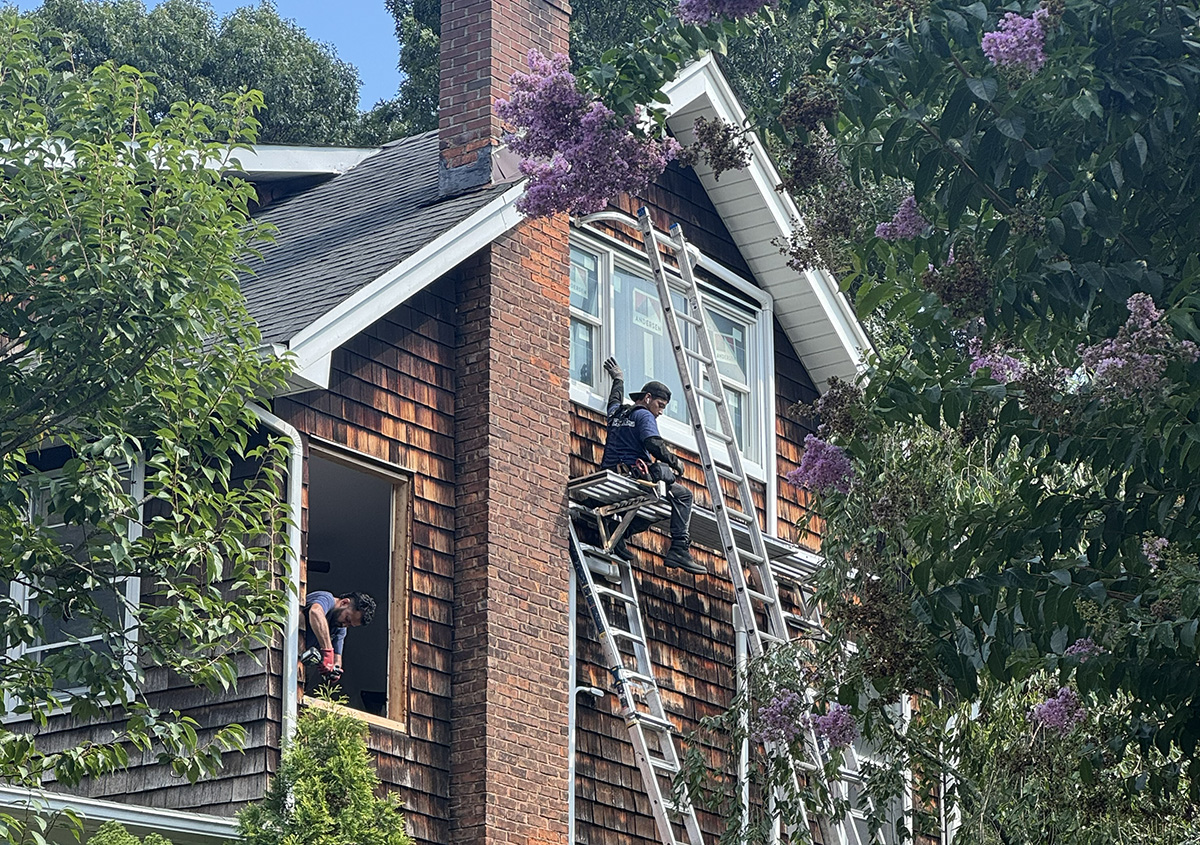
New windows can meaningfully improve your home’s energy efficiency — but there is no single savings figure that applies to every home. How much you gain depends on the age and condition of your current windows, the glass and frame you choose, your home’s construction, and the quality of the installation.
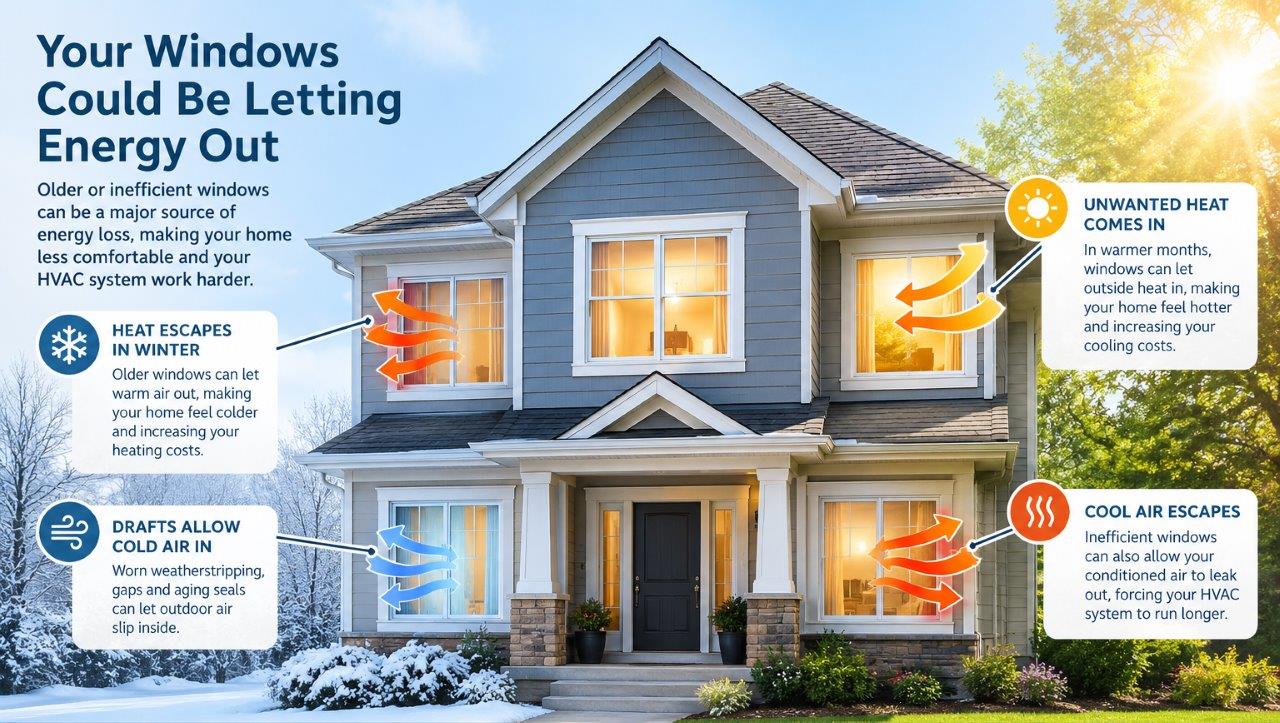
If your home feels a little too cold in the winter, too warm in the summer, or you notice drafts around your windows, you may be wondering whether replacing your windows can make a difference.
The short answer is yes—but how much of a difference depends on several factors, including the age and condition of your existing windows, the type of replacement windows you choose, your home’s construction, and how well the windows are installed.
For homeowners considering a window replacement project, understanding where the potential energy benefits come from can help you make a more informed decision.
Key Takeaways
- There is no universal savings number — windows are one part of a system that includes insulation, doors, roof, HVAC and air sealing.
- Be wary of a specific savings promise from anyone who hasn’t seen your home.
- Low-E coatings control heat transfer through the glass in both directions, winter and summer.
- Moving from single-pane to double or triple-pane is the single biggest glass upgrade for most older homes.
- Argon or krypton gas fills between the panes further reduce heat transfer.
- Frames, seals and weatherstripping matter too, especially in older homes where windows no longer close tightly.
- Installation determines whether the window performs as designed — ask who installs and what warranty applies.
- You don’t have to replace everything at once: start with the worst windows or the least comfortable rooms.
Why Do Older Windows Lose Energy?
Windows are one of the areas of a home where outdoor temperatures can affect indoor comfort.
Older windows may have:
- Single-pane or older double-pane glass
- Worn or deteriorating weatherstripping
- Gaps around the frame
- Aging seals
- Frames that have deteriorated over time
- Air leaks round the window opening
You may notice the effects as a room that always seems colder in the winter or warmer in the summer—or you may find yourself adjusting the thermostat more often to stay comfortable
Can New Windows Lower Your Energy Bills?
They can, particularly when replacing older, inefficient windows. Modern windows are designed with technologies that can help reduce heat transfer and air leakage.
However, it’s important to remember that windows are just one part of your home’s overall energy performance. Insulation, doors, the roof, HVAC system, ductwork and air sealing can all affect your home’s energy use.
That’s why there isn’t one universal number for how much homeowners will save after replacing their windows.
Instead, think about replacement windows as one piece of a larger effort to make your home more comfortable and energy efficient.
What Makes a Window Energy Efficient?
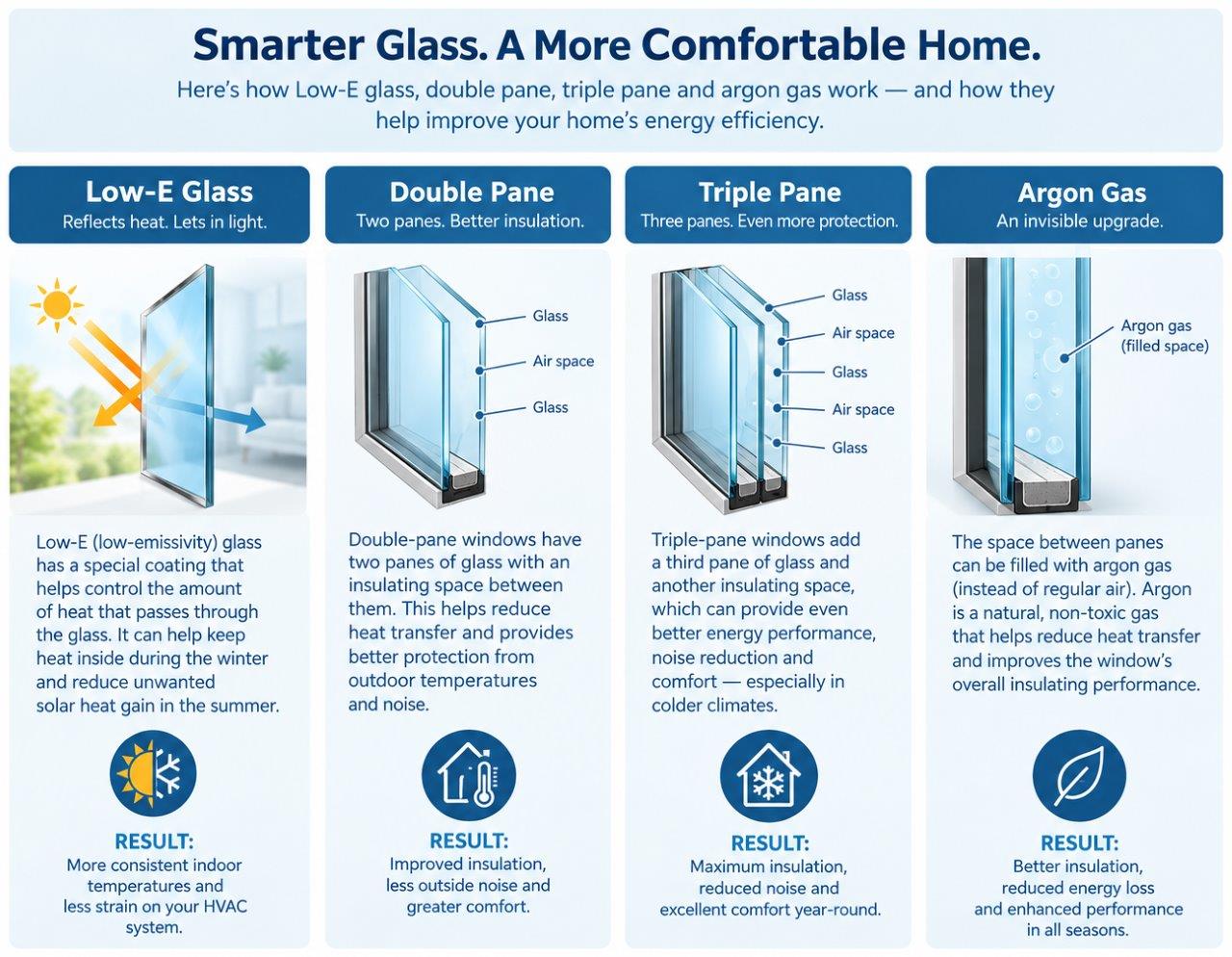
Today’s replacement windows offer features that weren’t commonly available in older windows. Here are a few things to look for when comparing options.
| Feature | What it does |
|---|---|
| Low-E glass | A coating that helps control how much heat passes through the glass, in both seasons |
| Double-pane / triple-pane | Adds panes and insulating spaces; the biggest step up from single-pane glass |
| Argon or krypton gas | Fills the space between panes to further reduce heat transfer |
| Frames and weather seals | Improved materials, seals and weatherstripping reduce air infiltration |
Low-E Glass
- Low-E, or low-emissivity, glass has a special coating designed to help control the amount of heat that passes through the glass.
- Depending on the type of Low-E glass used, it can help keep heat inside during the winter while reducing unwanted solar heat gain during the warmer months.
- That can help make rooms more comfortable throughout the year.
Double-Pane and Triple-Pane Glass
- If your existing windows have single-pane glass, moving to modern double-pane or triple-pane windows can be a significant upgrade.
- Double-pane windows have two panes of glass with an insulating space between them. Triple-pane windows add another pane and another insulating space.
- The right choice depends on your home, climate, budget and performance goals.
Argon or Krypton Gas
- The spaces between panes of glass can be filled with insulating gases such as argon or krypton.
- These gases help reduce heat transfer through the window and are commonly used in today’s energy-efficient window designs.
Better Frames and Weather Seals
Glass isn’t the only thing that matters. Today’s windows are also designed with improved frame materials, seals and weatherstripping to help reduce air infiltration.
This can be particularly noticeable in older homes where windows may no longer close tightly or where weatherstripping has deteriorated.
Don’t Forget About Installaton
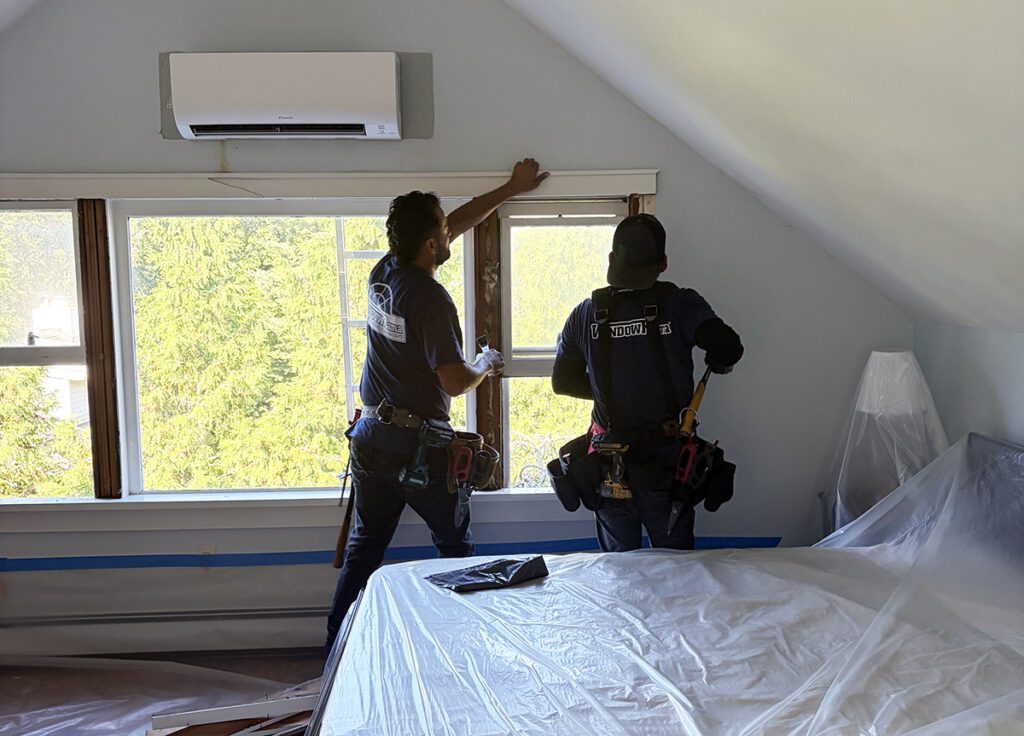
Even a high-performance window needs to be properly installed to perform as intended.
Installation is an important part of the overall project because the space around the window needs to be properly sealed and the window needs to be installed correctly.
If you’re comparing window replacement companies, don’t just ask, “What kind of windows do you sell?”
Also ask about who will install them, how they are installed and what kind of installation warranty is provided.
How Do You Know If Your Windows Are Costing You Energy?
You don’t necessarily need to wait for your energy bills to tell you that your windows are underperforming.
Look around your home for some common warning signs:
- You feel drafts near your windows
- Certain rooms are noticeably colder or warmer than others
- Your windows are difficult to open or close
- You see condensation between panes of glass
- Your frames show signs of deterioration.
- You frequently adjust the thermostat to stay comfortable.
- Your windows are more than a few decades old.
One sign by itself doesn’t necessarily mean your windows need to be replaced. But if you’re noticing several of these issues, it may be worth having a professional evaluate them.
What About Energy Savings?
Replacing your windows isn’t necessarily going to cut your heating and cooling bills in half—and anyone promising a specific savings amount without knowing anything about your home should be viewed cautiously.
Your actual results can depend on everything from the number and size of your windows to your home’s insulation, orientation, HVAC system, local climate and how much air leakage existed before the project.
The potential benefits go beyond your monthly utility bill, too.
New windows can help improve comfort, reduce drafts, provide better temperature control and give your home a fresh new look.
And for many homeowners, those benefits are just as important as potential energy savings.
Should You Replace All Your Windows at Once?
Not necessarily.
Some homeowners replace all of their windows as part of a larger renovation, while others choose to tackle the project in stages.
If you’re working within a budget, you might start with the windows that are in the worst condition or the rooms where you notice the biggest comfort problems.
A window professional can help you determine which approach makes the most sense for your home and budget.
Thinking About Replacing Your Windows?
If your windows are drafty, difficult to operate or simply past their prime, fall can be a great time to start thinking about replacement.
At WindowRama, we help homeowners explore different window styles, materials, glass options and performance features to find solutions that fit their homes and budgets. Whether you’re replacing a few windows or considering a whole-home project, our team can help you understand your options from selection through installation.
Ready to find out if replacement windows are right for your home? Contact WindowRama to schedule a consultation and start exploring your options.
Related Reading
- How to Choose Energy-Efficient WindowsGlazing, panes and ratings.
- The Benefits of Low-E GlassWhat the coating actually does.
- Window & Door Energy PerformanceU-factor, SHGC and NFRC labels.
- Choosing the Right WindowsVinyl, wood, fiberglass and clad.
- Why a Certified Installer MattersInstallation decides performance.
- Browse Window StylesEvery style in one place.