
September 18, 2025 by WindowRama
Aluminum vs Vinyl Windows – Which Is Better?
Choosing the right window material is an important decision to maximize your budget with performance, aesthetic, and energy efficiency. Two materials in particular, Vinyl vs aluminum windows, are popular choices. Each offers unique benefits and drawbacks.
Vinyl windows are known for their energy efficiency and affordability. They provide excellent insulation and require minimal maintenance.
Aluminum windows, on the other hand, are celebrated for their strength and modern look. They are durable and can withstand harsh weather conditions.
Vinyl vs Aluminum Windows Overview
Each material type caters to different needs and preferences.
While both materials have their advantages, vinyl generally proves to be a more energy-efficient and cost-effective option over its lifespan, whereas aluminum is prized for its strength and modern aesthetic.
Cost and Lifespan
Vinyl windows are typically less expensive upfront than Aluminum windows. The average cost for a normal-sized vinyl window is around $900 while the average for an aluminum window is about $2,500 with installation. This price can vary widely based on quality, size, and installation complexity.
Vinyl windows often provide better long-term value due to their superior energy efficiency, which leads to reduced heating and cooling costs. While aluminum windows have a longer average lifespan of 20–25 years, or sometimes up to 30 years, vinyl can last 20–40 years with proper maintenance, but cheaper vinyl might only last 10-15 years. This longevity makes the higher initial cost of high-quality vinyl a worthwhile investment.
Energy Efficiency
Energy efficiency is a major differentiator between the two materials. This is measured by the U-factor (the rate of heat transfer) and the Solar Heat Gain Coefficient (SHGC) (the amount of solar radiation that passes through the window). A lower U-factor and SHGC indicate better energy performance.
Thermal Conductivity: Aluminum is a metal with a high thermal conductivity of 160 W/mK, which means it transfers heat and cold easily. This can lead to significant heat loss in the winter and heat gain in the summer. In contrast, vinyl (polyvinyl chloride or PVC) has a thermal conductivity of 0.17 W/mK, making it a natural insulator.
Heat Transfer: As a result of their thermal properties, vinyl windows are significantly more energy-efficient. They minimize heat transfer and can reduce energy bills, especially in climates with extreme temperatures. While aluminum windows can be improved with thermal breaks (insulating strips), they still rarely match the insulating capabilities of vinyl.
Durability and Maintenance
Aluminum is known for its strength, making it ideal for large, thin frames and modern architectural designs. However, it is prone to dents, dings, and corrosion, especially in coastal or humid environments. Vinyl is durable in most climates and is resistant to rot and corrosion, but it can warp and crack in extreme temperature fluctuations.
Both materials are relatively low-maintenance compared to wood. Vinyl windows are virtually maintenance-free, only requiring occasional cleaning with soap and water. Aluminum windows may need regular cleaning to prevent corrosion and a silicone-based lubricant applied to moving parts. The finish on aluminum can also fade over time and may require repainting.
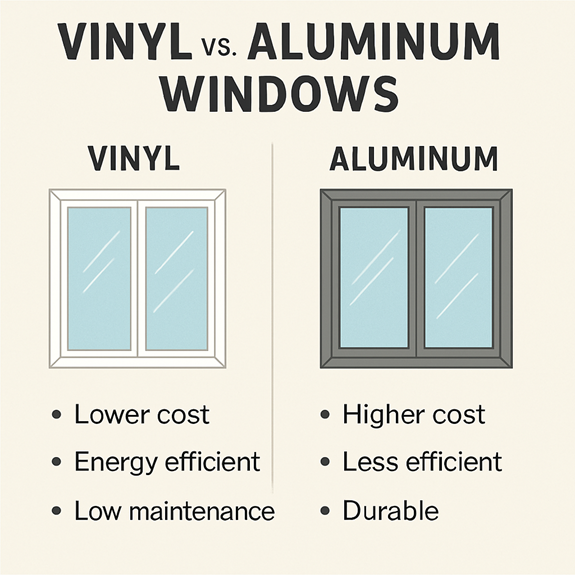
Vinyl windows are known for their affordability and insulating properties. They’re easy to install and offer a variety of styles. Aluminum windows bring strength and a modern aesthetic to your home. They excel in durability, especially in extreme weather conditions.
In summary:
- Vinyl: Cost-effective, energy-efficient, low maintenance.
- Aluminum: Strong, sleek, durable.
Appearance and Aesthetics
When it comes to appearance, vinyl and aluminum windows offer distinct styles. Vinyl windows are available in a multitude of colors and finishes. This allows for customization to suit any home aesthetic. On the other hand, they might not achieve the same sleek look as aluminum.
Aluminum windows are often chosen for their modern, minimalistic appearance. Their thin frames allow for larger glass areas and more natural light. If you prefer contemporary design aluminum windows may be a better fit aesthetically. Vinyl tends to match more traditional tastes.
Key attributes of window aesthetics:
- Vinyl: Versatile styles, traditional appeal.
- Aluminum: Modern design, more glass area.
Your choice can impact your home’s curb appeal and home value. According to a 2024 report from Remodeling Magazine‘s annual Cost vs. Value Report, homeowners can expect to recoup approximately 67.5% of the cost of a vinyl window replacement
Durability and Lifespan
Vinyl windows are known for their resilience against weather conditions. They resist moisture and are less likely to warp over time. This makes them a solid choice for humid areas like bathrooms or kitchens. Or if you live in coastal, humid region such as the coasts of Long Island or near the beaches in Connecticut such as Westport, vinyl may serve as a better choice.
Aluminum windows, however, are celebrated for their strength. They handle extreme weather better than vinyl, making them perfect for storm-prone areas. Despite their robustness, they might show scratches or dents more easily than vinyl.
Both materials promise significant longevity, though their lifespans differ slightly. Vinyl windows typically last 20 to 40 years, whereas aluminum windows can endure for 30 to 50 years. As you might expect, there are cheaper versions of each material that can greatly impact the lifespan of your windows so consider this when you factor in the value of the upfront cost and speak to one of our showroom experts to learn more about the differences
Energy Efficiency and Insulation
Energy efficiency is one of the top considerations for new or replacement windows. Vinyl windows typically excel in this area due to their superior insulation properties. They are less conductive, which reduces heat transfer, keeping homes cooler in summer and warmer in winter.
Some windows, such as Western Window Products utilize a proprietary technology known as AccuForge™ which creates a tighter seal in the window to prevent any unwanted air leakage and improve overall energy efficiency!
Aluminum windows are not as naturally insulating as vinyl. They tend to conduct heat more readily, making them less energy-efficient. However, many aluminum windows now come with thermal breaks—insulated sections that help reduce heat transfer.
Both vinyl and aluminum windows can be enhanced with energy-efficient glass options. When purchasing new replacement vinyl or replacement aluminum windows always consider double or triple glazing and low-E coatings that can boost their respective performance significantly.
Cost of Windows: Vinyl vs Aluminum
The next aspect to consider is if vinyl vs aluminum windows fit better for your budget. Vinyl windows are typically more affordable than their aluminum counterparts. Their lower price point makes them a popular choice, especially for budget-conscious homeowners.
Aluminum windows, while more expensive, offer a premium look and feel. Their sleek design appeals to those seeking modern aesthetics but comes with a higher price tag.
The cost of windows can vary greatly based on size, design, and additional features. Energy-efficient upgrades such as double glazing or low-E coatings can also add to the expense. Considering factors such as window lifespan, resale value, energy savings and durability may make one window choice more affordable in the long term.
Maintenance and Upkeep
Vinyl windows are known for their low-maintenance nature. They don’t need painting or sealing, which simplifies upkeep significantly. Aluminum windows, however, may demand more attention over time. While they resist rust, condensation can be an issue, necessitating regular checks. Proper maintenance can prolong their lifespan and performance as long as 40 years.
Aluminum Clad vs Vinyl Clad Windows
When choosing between window materials, you may encounter hybrid options like aluminum clad and vinyl clad windows. These offer a blend of benefits, appealing to those seeking both durability and energy efficiency.
Aluminum clad windows boast an aluminum exterior that adds strength and is resistant to weather. Inside, they provide a traditional wood or vinyl look for added insulation. Conversely, vinyl clad windows offer better thermal performance due to their superior insulation properties.
Hybrid options help to meet more specific needs and merge some of the benefits of either type of window and may be the best of both worlds for homeowners looking to replace their current windows and get the best possible performance!

Which Is Right for You? Key Factors to Consider
Selecting between vinyl and aluminum windows depends on various factors. Key considerations should align with your personal preferences and specific home requirements.
| Feature | Vinyl Windows | Aluminum Windows |
|---|---|---|
| Initial Cost | Lower. Typically ranges from $850 to $1,400 per window, with installation costs varying. | Higher. Generally costs between $1,500 and $2,000 per window. |
| Energy Efficiency | Excellent. Vinyl is a natural insulator with a thermal conductivity of 0.17 W/mK, significantly reducing heat transfer. Replacing old windows with new vinyl ones can lead to an average annual energy savings of 12%. | Lower (without thermal breaks). Aluminum has a high thermal conductivity of 160 W/mK and conducts heat easily. Newer models with thermal breaks improve performance but still may not match vinyl. |
| Durability & Lifespan | Good. Resistant to rot and corrosion. High-quality vinyl can last 20-40 years, but cheaper options may warp or crack in extreme temperatures. | Excellent. Strong and rigid, making it ideal for large frames. Can last 20-25 years, but is prone to corrosion, dents, and dings, especially in coastal areas. |
| Maintenance | Very Low. Requires only occasional cleaning. No need for painting or refinishing. | Low to Moderate. Needs regular cleaning to prevent corrosion and may require lubrication for moving parts. The finish can fade and may need to be repainted. |
| Aesthetics | Versatile. Comes in a wide variety of colors and styles, but frames are often thicker due to the manufacturing process. | Modern & Sleek. Allows for very thin, strong frames that maximize glass space. |
| Return on Investment (ROI) | High. Homeowners may recoup approximately 67.5% of the cost of a vinyl window replacement. | Moderate. The same report found that aluminum windows have a lower ROI, and their energy inefficiency can mean a higher cost of ownership over time. |
Frequently Asked Questions
Are vinyl windows more energy-efficient than aluminum?
Yes, vinyl windows typically offer better insulation. They reduce heat transfer more effectively than aluminum. This makes them more energy-efficient overall.
Do aluminum windows require more upkeep?
Aluminum windows can corrode if not treated. Regular maintenance helps preserve their appearance and function.
Which windows last longer?
Lifespans vary. Aluminum windows generally outlast vinyl, offering 30-50 years of service. Vinyl windows usually last 20-40 years.
Are vinyl windows less costly?
Yes, vinyl is often cheaper upfront. Consider long-term savings from energy efficiency when comparing costs.
Can vinyl windows withstand extreme heat?
Yes, high-quality vinyl windows are manufactured to withstand extreme heat and UV exposure. Manufacturers use specific additives like titanium dioxide to improve durability and prevent the material from warping or becoming brittle. While cheaper vinyl may be susceptible to degradation, well-made vinyl windows are designed to perform effectively in hot climates for 20-30 years or more.
What finishes are available for aluminum windows?
Aluminum windows offer a variety of durable finishes to suit different aesthetic and functional needs. The most common finishes include:
Anodizing: An electrochemical process that strengthens the natural oxide layer of the aluminum, providing a durable, corrosion-resistant, and long-lasting finish. It’s often available in clear, black, and bronze tones.
Powder Coating: A dry powder is electrostatically applied and then baked onto the surface, creating a tough, protective layer. This finish offers a wide range of colors and textures (matte, glossy, or textured) with excellent resistance to UV radiation and fading.
PVDF (Polyvinylidene Fluoride) Coatings: A high-performance, resin-based liquid coating that is highly resistant to chalking, fading, and chemical degradation. It is a premium option often used for its superior color retention in harsh environments.
Mechanical Finishes: These include processes like polishing, brushing, or blasting to create a specific texture and appearance, such as the popular “brushed aluminum” look.
How does installation impact performance?
Proper installation is just as critical as the quality of the window itself. Even a high-end, energy-efficient window will fail to perform correctly if not installed properly. A correct installation ensures a tight, airtight, and watertight seal, preventing air leaks and water infiltration.
Improper installation can lead to:
Energy Loss: The U.S. Department of Energy estimates that 25% to 30% of residential energy use is due to heat gain and loss through windows. Gaps from a poor installation can completely negate the energy-saving benefits of new windows, leading to higher utility bills.
Structural Damage: Air and water leaks can lead to mold, wood rot, and compromised structural integrity over time.
Reduced Lifespan and Voided Warranties: Misalignment or an improper fit can cause premature wear and tear on the window, and many manufacturers will void their product warranty if the installation does not meet their specific requirements.
Conclusion
Choosing between vinyl and aluminum windows depends on several factors. Consider energy efficiency, cost, aesthetics, and regional climate. Vinyl windows offer superior insulation and require less maintenance. They’re often more budget-friendly.
Aluminum windows shine in strength, durability, and a modern look. They might fit perfectly in areas prone to harsh weather. Both options have merits and challenges. Weigh these carefully to determine which suits your needs and preferences best. Customization possibilities and potential long-term benefits should also guide your choice. And if you have any questions in finding the perfect fit for your home our showroom experts can help guide you through all the different choices, including window material options such as wood or composite!